Backflow incense burners
How to clean a backflow incense burner (resin and ceramic)
How to clean a backflow incense burner: clear sticky build-up from the holes and channels, which tools to use, and how to treat resin vs ceramic.
To clean a backflow incense burner, let it cool, tip out the ash, then wipe it with a cloth dampened in warm soapy water and clear the hole and channels with a cotton bud or pipe cleaner. Dry it fully before you use it again. Resin burners need a gentle touch so you don't damage the paint. Ceramic burners can usually take a bit more.
Cleaning isn't just about looks. Residue narrows the channels, which is one of the reasons backflow stops working over time.
Why burners get dirty
As backflow smoke travels through the burner, some of it settles on the inside of the channels and on the surfaces it flows over. Over time that builds up into a sticky, brownish film. Some burners also leave a light oily residue on whatever they're sitting on.
That build-up can:
- partly block the hole the cone sits on, so less smoke goes down
- make the smoke flow unevenly or stop part-way
- smell stale or burnt when the burner warms up
- dull the finish of the burner
How often to clean
- After every use: a quick wipe of the top and the area around the hole, once it's cold.
- Every few weeks: a proper clean of the channels and pools, depending on how often you use it.
- Whenever the flow gets worse: if the smoke used to flow well and now doesn't, check for build-up first.
What you need
- a soft cloth or microfibre cloth
- warm water and a little washing-up liquid
- cotton buds
- pipe cleaners (great for narrow channels)
- a soft brush, like an old soft toothbrush
- a cocktail stick for stubborn bits around the hole (use gently)
- a towel to dry it on
Step by step
1. Let it cool completely
The top of the burner can stay hot for a while after the cone goes out. Wait until it's cold to the touch, and make sure there's nothing still smouldering.
2. Empty the ash
Tip out the used cone and any ash into a bin. Use a dry brush to sweep ash out of pools or crevices.
3. Wipe the surfaces
Dampen a cloth in warm soapy water and wring it out well. Wipe the surfaces, paying attention to the areas the smoke flows over. For textured or detailed designs, use a soft brush.
4. Clear the hole and channels
This is the important bit.
- Dip a cotton bud in warm soapy water, squeeze out the excess, and work it gently around the hole where the cone sits.
- Push a pipe cleaner through the channel from the top or the outlet. Twist it as you go to lift residue.
- For hard bits around the edge of the hole, a cocktail stick can help. Don't dig or scrape the finish.
- Hold the burner up to the light or blow gently through the hole to check it's clear.
5. Rinse
Wipe everything again with a cloth dampened in plain water to remove any soap.
6. Dry thoroughly
Pat it dry with a towel, then leave it to air dry, ideally overnight. Water left in the channels can make your next cone damp, and damp cones don't flow well.
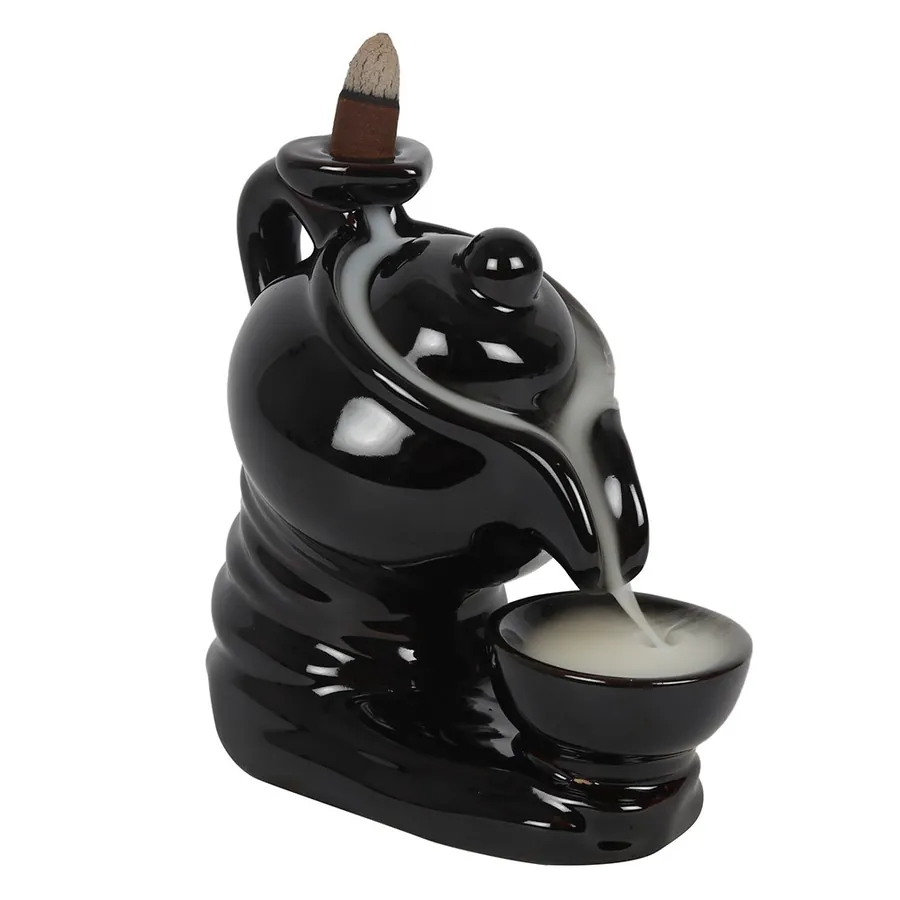
Teapot and Cup Backflow Incense Burner
A black ceramic teapot pours smoke into a cup. Place a backflow cone on the handle and watch it flow from the spout.
£17.99
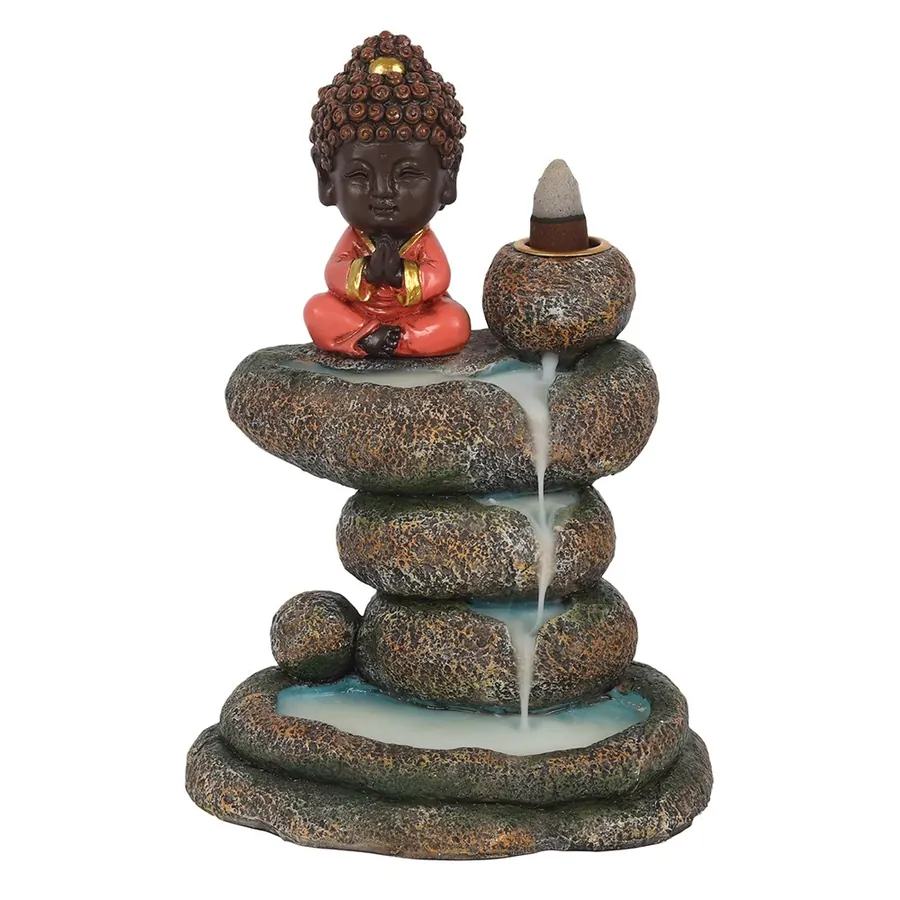
Red Buddha and Rock Pond Backflow Incense Burner
A cheerful Buddha in red sits on stacked rocks. Smoke from a backflow cone runs from pond to pond like water.
£25.99
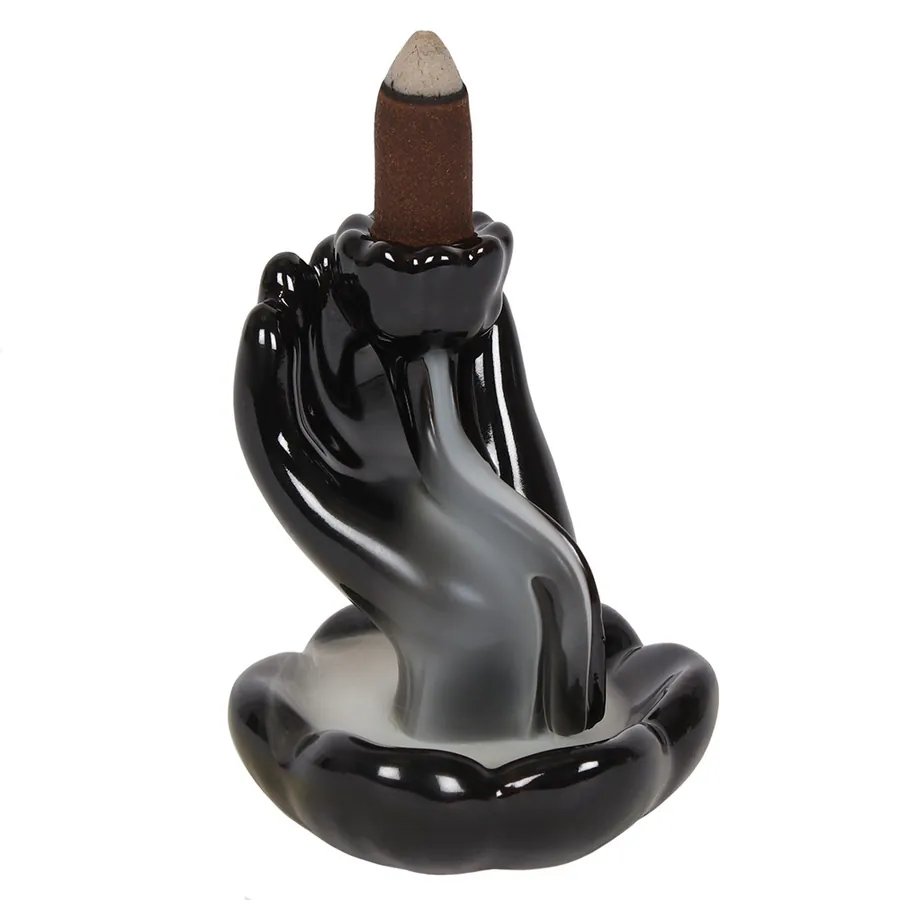
Small Hand and Lotus Backflow Incense Burner
A small glossy black hand holding a lotus flower. Smoke from a backflow cone curls down around the wrist. 9 cm tall.
£6.99
Resin vs ceramic burners
Resin burners
Most decorative backflow burners, including detailed figures, dragons and pond designs, are made from resin or polyresin. Many have a painted or bronze-effect finish.
- Use a damp cloth, not a soaking. Don't submerge resin burners in water, because water can get into joins and under paint.
- Avoid scouring pads and abrasive cleaners. They'll scratch or strip the finish.
- Avoid strong solvents. If you want to try something stronger than soapy water, test it on a small hidden spot first, and accept it might affect the paint.
- Don't put them in the dishwasher. The heat and detergent can damage the finish.
Ceramic burners
Ceramic burners, like our black teapot design, generally have a smoother surface and are a little easier to clean.
- Warm soapy water and a soft brush work well.
- A short soak in warm soapy water can help loosen stubborn residue, as long as there's no painted decoration that could be affected.
- Avoid sudden temperature changes, such as putting a warm burner in cold water. That can crack ceramic.
- Dry very thoroughly, as some ceramic can hold moisture.
If you're not sure what your burner is made of, check the product page or packaging. When in doubt, treat it like resin and be gentle.
Pond and waterfall burners
Burners with pools and steps tend to collect ash and residue in the dips. Brush out ash first, then clean each pool with a cotton bud. Make sure the overflow points between pools are clear so the smoke can spill from one level to the next.
Protecting your furniture
Some burners leave a light oily mark on the surface underneath. Put the burner on a coaster, tile or small tray. Wipe the tray when you clean the burner.
If you prefer cone burners or ash catchers for normal incense, they're easy to wipe clean too. Have a look at our cone burners and ash catchers.
After cleaning: still not flowing?
If the burner is clean and dry and the smoke still won't go down, the cause is probably elsewhere: a draught, a warm room, a damp cone or a normal cone by mistake. Work through our backflow troubleshooting checklist.
Safety while cleaning
- Only clean a burner when it's completely cold and there's nothing smouldering.
- Don't use the burner again until it's fully dry.
- Keep ash, cones and lighters out of reach of children and pets.
For more on burning incense carefully at home, read is backflow incense safe?
More guides
You'll find all our backflow incense burners and backflow cones in the shop, shipped from a UK warehouse. See delivery for timings.
Questions people ask
How do you clean a backflow incense burner?
Let it cool completely, tip out any ash, then wipe the surface with a cloth dampened in warm soapy water. Clear the hole and channels with cotton buds or a pipe cleaner. Rinse the cloth, wipe again with plain water and let the burner dry fully before using it.
What's the best way to clean a backflow incense burner?
Little and often. A quick wipe with a damp cloth after each use stops residue hardening. For build-up, use warm soapy water, a soft brush and cotton buds. Be gentle with painted or bronze-effect resin and don't put burners in the dishwasher.
How do you clean a backflow incense holder?
The same way as a burner. Focus on the hole where the cone sits, because that's where residue builds up and blocks the flow. A pipe cleaner or cotton bud usually clears it.
Why does my backflow incense burner stink?
Old residue builds up inside the channels and on the surfaces, and can smell stale or burnt when it warms up again. A proper clean usually fixes it.