Backflow cones
Backflow vs normal incense cones: can you use regular cones?
Backflow cones have a hollow channel and a hole in the base; normal cones are solid. Here's how to tell them apart and what happens if you mix them up.
Backflow cones have a hole in the base leading to a hollow channel inside. Normal incense cones are solid. You can burn a normal cone on a backflow burner, but the smoke will rise rather than flow down, because there's no channel for it to travel through. To get the waterfall effect, you need backflow cones.
Here's how to tell them apart, and what happens when you mix them up.
How to tell them apart
Turn it over
The quickest check is to look at the base.
- Backflow cone: a clear, round hole in the middle of the base. It goes up inside the cone, often for a good part of its height.
- Normal cone: a flat, solid base with no hole.
Look at the shape
Backflow cones are often a little squatter and wider at the base than standard cones, to make room for the channel. Jumbo backflow cones are noticeably bigger. This isn't a reliable test on its own, though. Always check the base.
Check the packet
Packets usually say "backflow" on them. Satya, for example, label theirs as backflow dhoop cones. If a packet just says "incense cones", it's probably normal cones.
What happens if you mix them up?
Normal cone on a backflow burner
It will burn, but the smoke rises from the tip like any other incense. There's no channel to draw smoke down, so the burner's hole does nothing.
A couple of practical points:
- The cone may sit unevenly over the hole. Make sure it's stable.
- Ash will fall into or around the hole. Clean it out afterwards so it doesn't block your next backflow cone.
This is one of the most common reasons people think their burner doesn't work. If that's been happening to you, see why is my backflow incense not working.
Backflow cone in a normal cone burner
It burns like a normal cone. Without a hole and channel underneath, the smoke simply rises. You'll get the scent, but not the visual effect.
That's fine if you just want the fragrance, or if you've run out of normal cones.
Backflow cone on a flat dish
The same as above. The hole in the base is blocked by the dish, so the smoke has nowhere to go but up. Use a heat-resistant dish or ash catcher if you do this, and never leave it unattended.
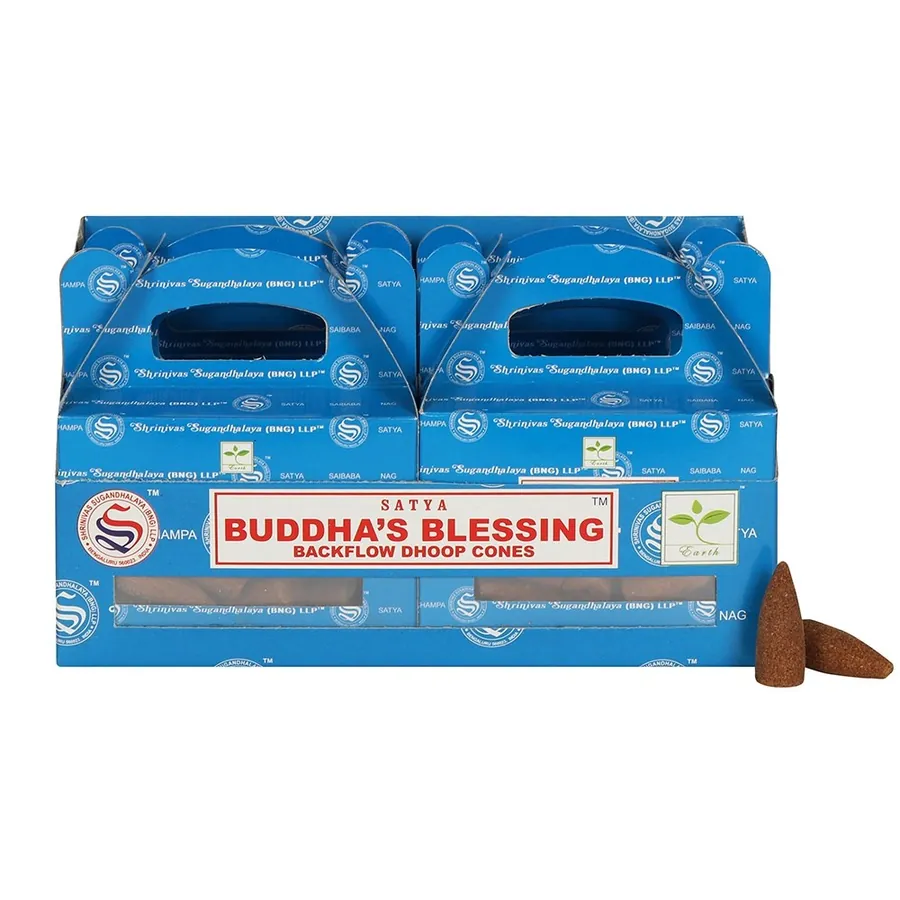
Satya Buddha's Blessing Backflow Cones, 6 Packs
A display box of 6 packs of Satya Buddha's Blessing backflow dhoop cones, made in India, for backflow incense burners.
£22.99
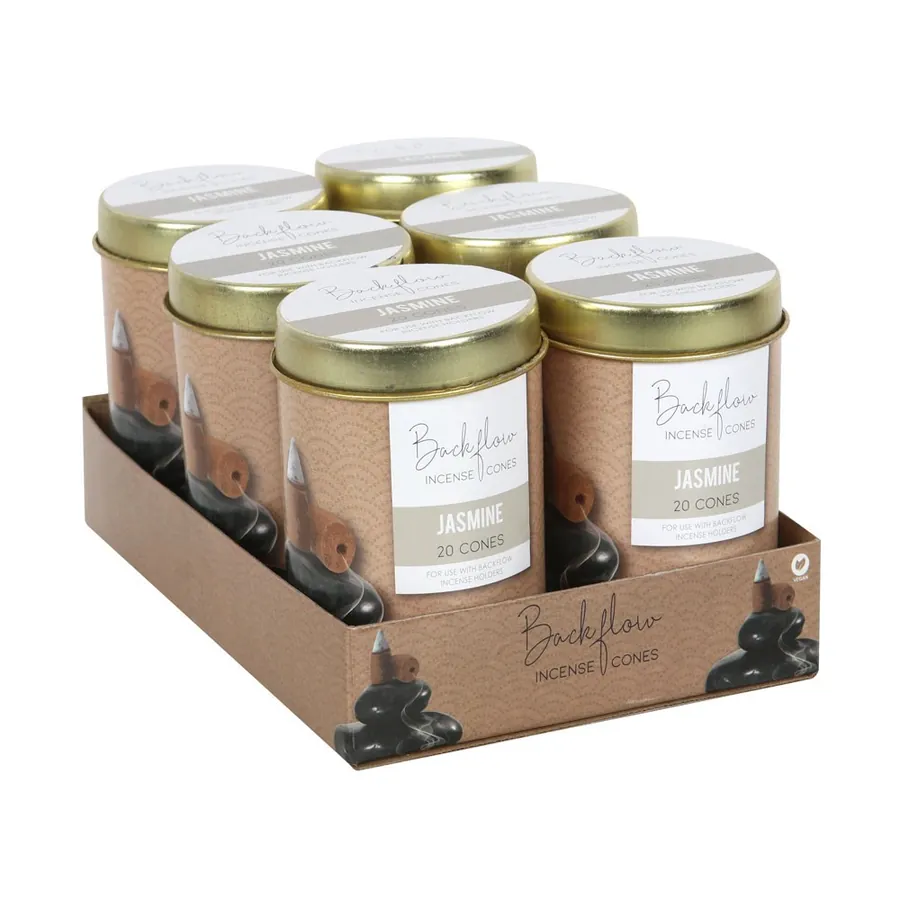
Elements Jasmine Jumbo Backflow Cones, 6 Tins of 20
Six tins of 20 jumbo jasmine backflow cones (120 in total) by Elements, handmade in India. Vegan.
£17.99
Why the hollow channel matters
When a backflow cone smoulders, some of its smoke is drawn down the hollow channel and out of the base. By the time it comes out, it's cooler and full of particles, so it's denser than the air around it. That's why it sinks.
A solid cone has no such path, so its smoke stays hot and rises off the tip. Our guide on how backflow incense works explains it in more detail.
Can you make a normal cone into a backflow cone?
You'll see people online suggesting you drill or poke a hole in a normal cone. We don't recommend it. Cones crumble easily, the hole is rarely straight or clean, and the result usually doesn't flow well. Backflow cones are made with a proper channel from the start, so it's simpler to buy the right ones.
Do they smell different?
The scent comes from the ingredients and fragrance, not the shape. A backflow cone and a normal cone in the same scent from the same brand are likely to smell similar. Burn time is typically around 10–15 minutes per cone for either type, depending on size. Jumbo cones last longer.
Can you reuse a cone?
Not really. Once a cone has burned partway, it's hard to relight evenly, and a part-burned backflow cone may have a damaged channel. If a cone goes out early, you can try relighting the tip, but don't expect the flow to be as good.
Normal cones need a proper holder too
If you like normal cones as well, use a burner that's designed for them. Cone burners shaped like little houses let smoke rise out of a chimney. Ash catchers give the ash somewhere safe to land.
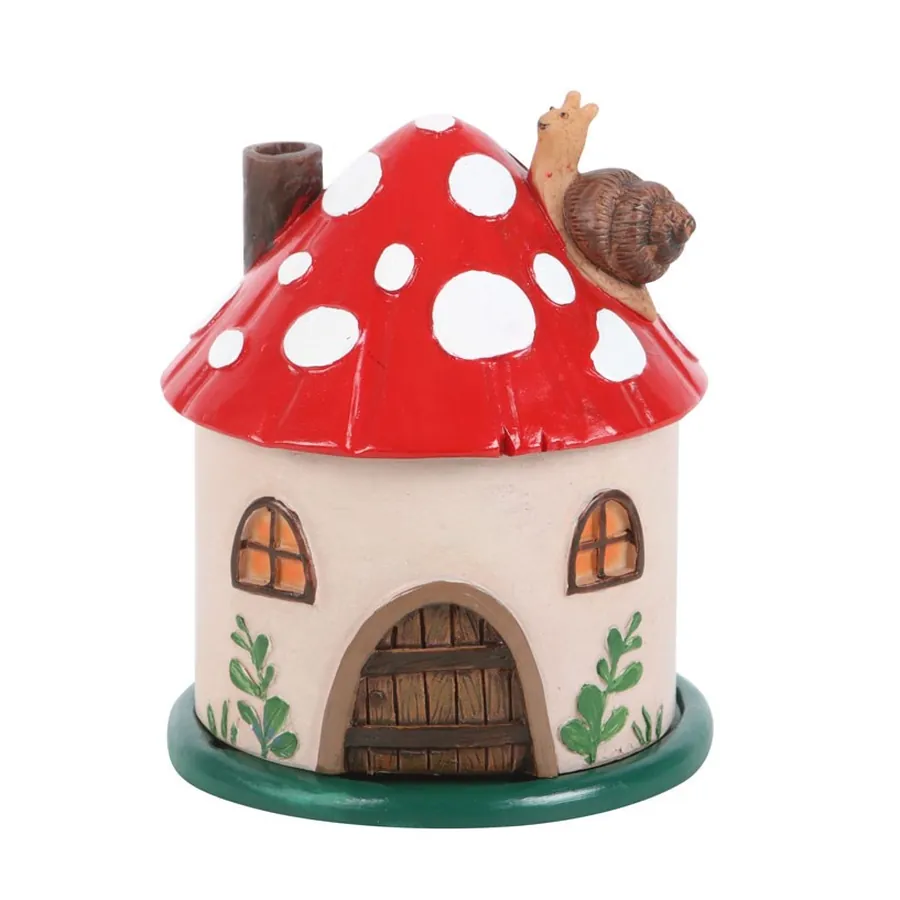
Mushroom House Incense Cone Burner
A red and white mushroom house cone burner. Put a lit cone inside and smoke comes out of the chimney.
£9.99
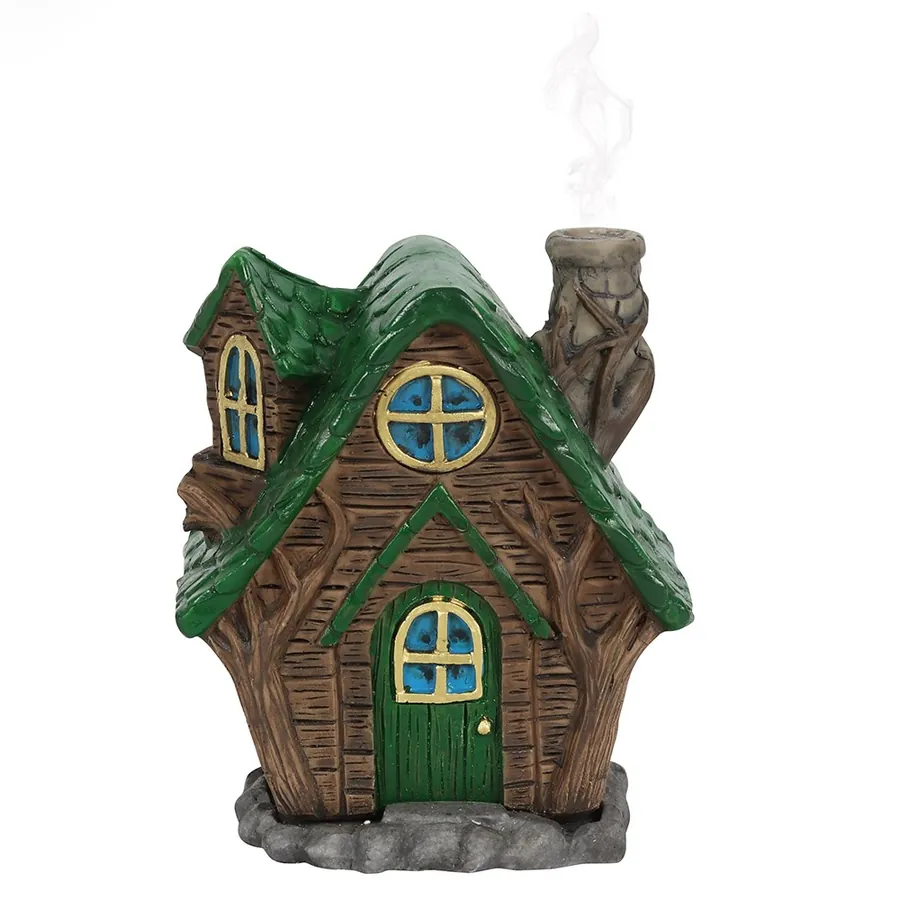
Woody Lodge Incense Cone Burner by Lisa Parker
A little woodland lodge cone burner designed by Lisa Parker. Smoke rises from a tiny chimney.
£9.99
Take a look at our cone burners and ash catchers for normal incense.
Quick reference
| Backflow cone | Normal cone | |
|---|---|---|
| Base | Hole leading to a hollow channel | Solid |
| On a backflow burner | Smoke flows down | Smoke rises |
| In a cone burner or dish | Smoke rises | Smoke rises |
| Packet usually says | "Backflow" | "Incense cones" |
Which should you buy?
It depends on what you've got and what you want to see.
- You have a backflow burner and want the waterfall effect: buy backflow cones. Check they suit the size of your burner. Standard cones fit most; jumbo cones need a wide, flat top.
- You have a house-style cone burner or an ash catcher: normal cones are the natural choice. Backflow cones will work too, but you're paying for a channel you won't use.
- You want both: keep the two types in separate, labelled tins or packets. They can look similar from the side, and mixing them up is an easy mistake to make in a dim room.
Whichever you buy, keep them sealed and dry. Damp cones burn unevenly, and damp backflow cones are one of the main reasons the smoke stops flowing down.
Safety
Both types produce smoke and fine particles. Burn incense in a ventilated room, keep it away from children and pets, use a heat-resistant holder, and never leave it unattended. More in is backflow incense safe?
Where to go next
Shop backflow incense cones and backflow incense burners, shipped from a UK warehouse. See delivery for timings.
Questions people ask
Can you use regular incense cones in a backflow burner?
You can burn them, but the smoke will rise like normal incense. Regular cones are solid all the way through, so there's no channel for the smoke to travel down. You need backflow cones for the waterfall effect.
What's the difference between backflow incense cones and regular cones?
A backflow cone has a hole in the base leading to a hollow channel inside. A regular cone is solid. The channel lets smoke travel down and out of the base, where it sinks instead of rising.
Can you use backflow cones in a normal cone burner?
Yes, they burn like normal cones in a standard cone burner or on an ash catcher. Without a backflow burner underneath, the smoke has nowhere to go but up, so you'll get rising smoke rather than a waterfall.
Are incense cones with holes in the bottom backflow cones?
Usually, yes. A clear hole in the base that runs up into the cone is the giveaway. If the hole goes a good way up inside the cone, it is almost certainly a backflow cone. Check the packet to be sure.